UiPath Communications Mining accelerates healthcare company Espria’s P2P process

Understanding P2P email flows

Less manual work

Foundation for further automation
Innovation is not a new concept for healthcare organization Espria. At the recent start of a pilot with UiPath Communications Mining, employees in the Purchase to Pay department were already used to robotization: several RPA robots were running, processing invoices in the financial system. There was one obvious bottleneck, though: the flow of about 3,000 emails per month coming in to the P2P mailbox.
Supplier inquiries, invoices, order confirmations, notifications of delays, payment specifications all ended up in the same place, and employees spent a lot of time daily sorting, dragging and classifying messages.
It was precisely that pressure that prompted Espria to partner with Tacstone Technology to explore whether UiPath Communications Mining could bring relief. The result is a path where technology and organization reinforce each other, and where the value is not only in automation, but also in rediscovering one’s own process.
Familiar with automation
Arno Rückert, Purchase to Pay team leader, saw in recent years how robotization took over more and more tasks from the department. “Our RPA robots all have a task. For example, RPA001 processes incoming invoices. Other robots perform operations within that package itself or support invoice processing. In this way, we are already well versed in RPA, and we are always continuing to look for ways to simplify operations.”
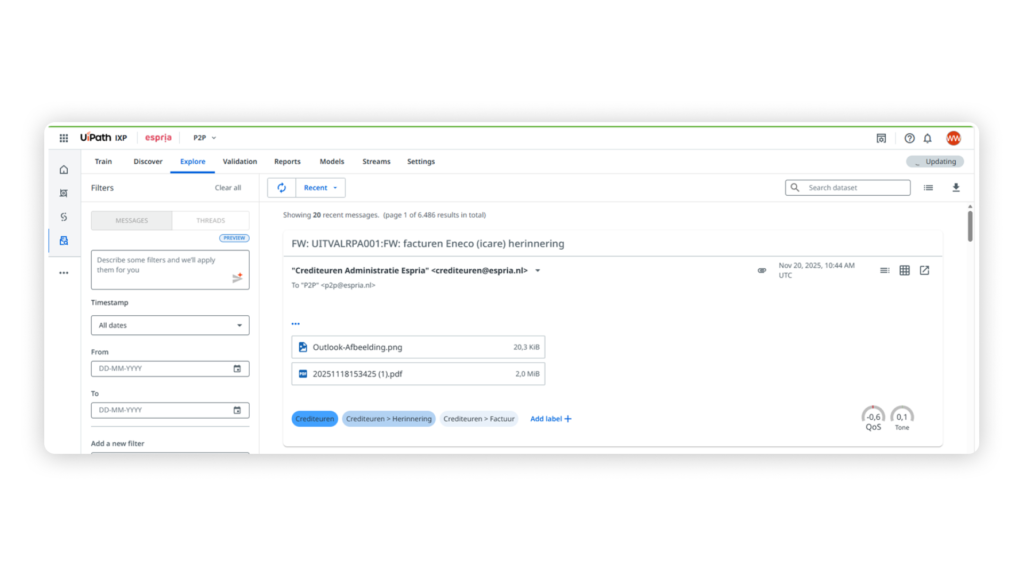
That vision made Espria open to Tacstone Technology’s suggestion to take a look at a new product, Communications Mining. This technology focuses on analyzing unstructured text, such as emails, and thus recognizing intentions, sentiment and characteristics. With this, an organization can gain insight into its own communication flows and later also link automated follow-up steps to those insights. First insight, then optimization and automation.
“P2P’s mailbox lent itself perfectly to such a pilot,” says Rückert. “Not only questions about invoices arrive there, but also notifications about orders and the invoices themselves. We wanted to improve the overview and avoid employees having to keep manually dragging and dropping messages.”

UiPath Communications Mining provides insight into volume by email category.
Expectations
When the concept was introduced, expectations were high. According to Rückert, the label “AI” immediately conjures up the image of self-thinking systems that can take over entire task flows. “When you hear AI, you quickly expect the model to be much more advanced. That it can automate a complete process and all we have to do is watch. In reality, this pilot focused purely on recognizing and classifying mail. The real automation comes after that, when you link the labels to robots or workflows.”
Even though the technological foundation is not yet an autonomous chain, it quickly became clear that there is much to be gained. The size of the mailbox, averaging 150,000 emails a year, makes it worthwhile to reduce human actions.
“Our goal is always the same: to make sure the invoice flow runs as smoothly as possible. Anything we can automate contributes to that.”
Eric Olofsen | P2P Specialist at Espria
Intensive training
The biggest effort during the pilot was not in the technology itself, but in training the AI (NLP) model. Although UiPath Communications Mining also learns autonomously what an email means (“unsupervised learning”), it needs to be made smart by employees labeling emails, making the model specific to their own environment.
Service desk employee Wijnanda Wesseling explains how it worked: “Eric and I dived into the platform every day for four weeks. The system offered us new emails each time, and we indicated which label belonged to it. That wasn’t hard, but it was intensive and very precise.”
“You really see the platform learning. Sometimes the system itself would suggest a label, and often it was already right. As the weeks progressed, you noticed we were able to work faster and the system started to understand our choices better.”
Wijnanda Wesseling | Service desk employee at Espria

Dashboards in UiPath Communications Mining show how the AI model is performing and which parts require training.
At the same time, the labeling process produced unexpected side effects. Wesseling: “Because you look at each mail and place it in a category, you automatically take a more critical look at the structure of your own mailbox. You see how many folders you actually have, where there is overlap and how things can be done differently. It was also a kind of cleaning up of our own way of working.” This is a side effect Tacstone Technology also sees in other projects with Communications Mining. Training an AI model forces you to step into the helicopter and look remotely at a central mailbox, rather than the busy delusion of the day where emails are processed piece by piece.
Profit
Although the system is not yet fully operational, the first improvements are already visible. Rückert: “The real gain is in the automation of follow-up steps. For example, if a supplier reports that an order is delayed, an employee will now manually look up who the order taker was and inform them. In the future, the system will automatically recognize the mail, extract the order number, look for the correct employee and send a notification itself.”
Reporting capabilities also provide opportunities. During the pilot, Wesseling noticed that some suppliers were emailing remarkably often, sometimes dozens of times a month. “That gets you thinking: why do we get so many messages from the same sender? Can we organize that process differently? The insights help us make structural improvements.”
One of the first concrete actions resulted from such an analysis. Espria was found to receive many requests for payment specifications, often immediately after a payment is made. However, that information could also be sent automatically at the time of payment. Rückert: “We picked that up immediately. By automating that, a whole category of mails disappeared.”
Acceptance
Within the P2P department, the arrival of Communications Mining has been well received. Wesseling: “I was not familiar with this technology and found it fascinating how much it can do. It will really save a lot of work soon.”
Communication about what the technology does and does not do is crucial. “It would have helped us if we had delineated a little more sharply beforehand that the pilot only concerned the mailbox,” says Rückert. “That avoided misunderstandings and made the results easier to place.”
Guidance and structure
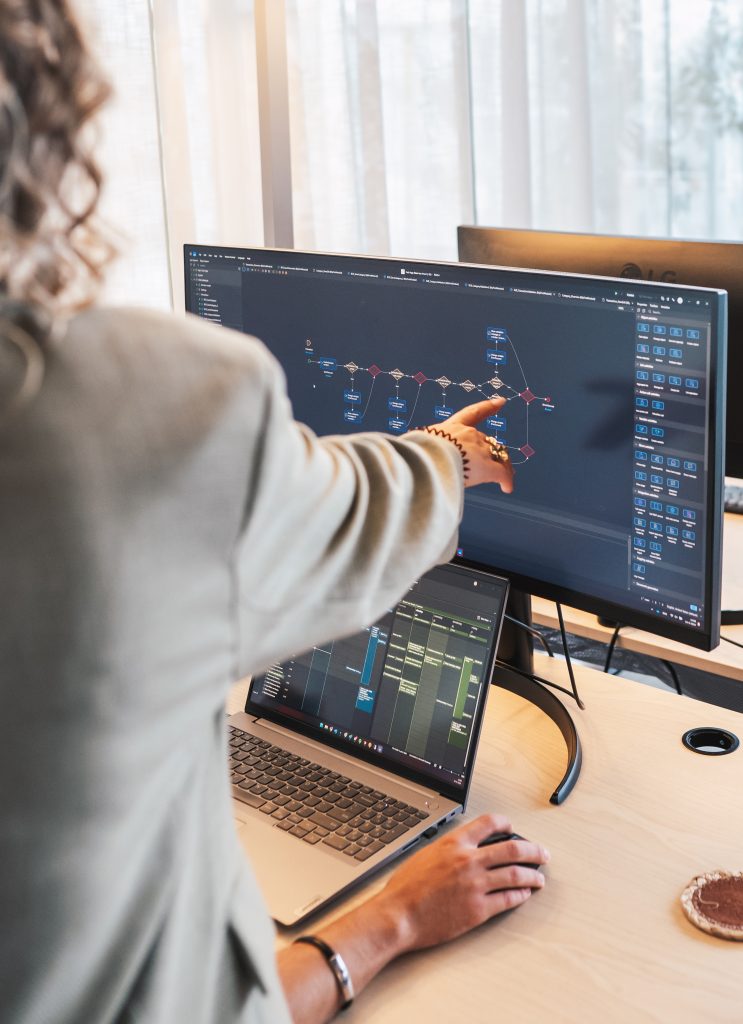
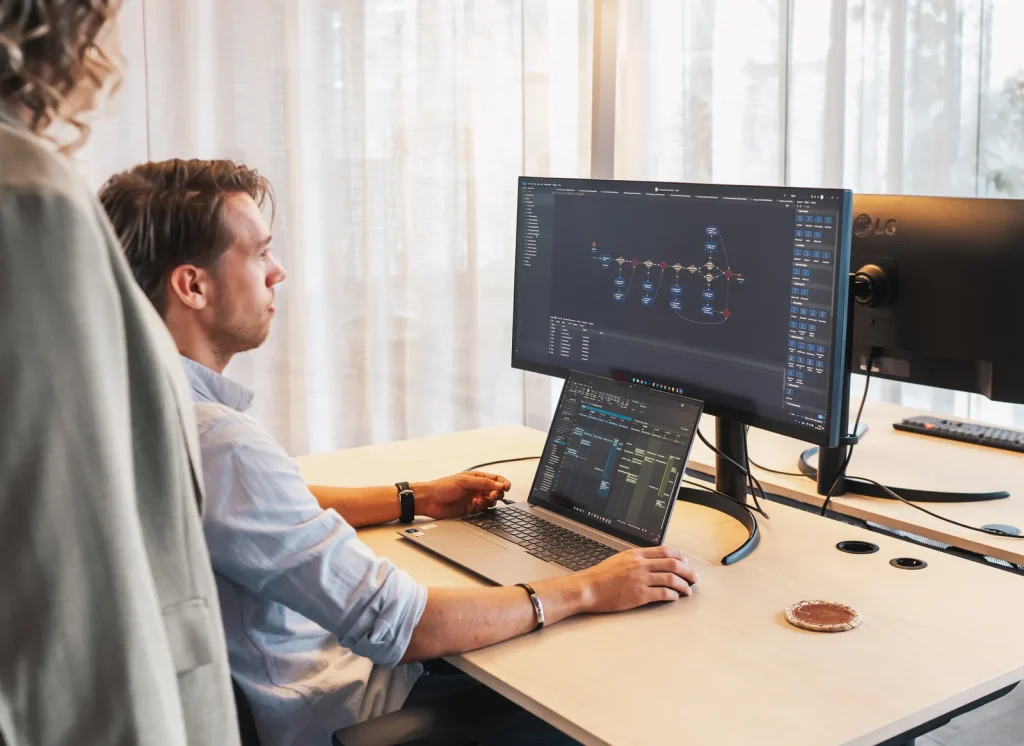
Tacstone Technology played a clear role in the implementation, along with Espria’s Smart Automations team. Tacstone consultants provided training, created process visualizations and supported the labeling process. According to all involved, the cooperation went smoothly. “We could always ask questions, and there was a quick response,” says Olofsen.
Now that the model has been trained and the mailbox is ready to go into production, Espria is looking ahead. The project has shown how valuable insight into communication flows can be and how AI-assisted classification can be a starting point for broader process automation.
“Communications Mining is not going to change us completely overnight, but it lays an important foundation. The next steps, such as linking to RPA, automating notifications, reducing recurring mail flows, are going to be the real gains.”
Arno Rückert | Team leader Purchase to Pay at Espria



Would you, like Espria also want to get acquainted with Communications Mining? And discover what benefits it offers your organization? Please contact us for an introduction and/or demo.
Perhaps also interesting

Mendix Development

AI in Healthcare
RPA Consultancy
Test Automation

Tacstone Technology FD Gazelle 2025!

Geerten Oelering joins Tacstone Technology

Tacstone Talks
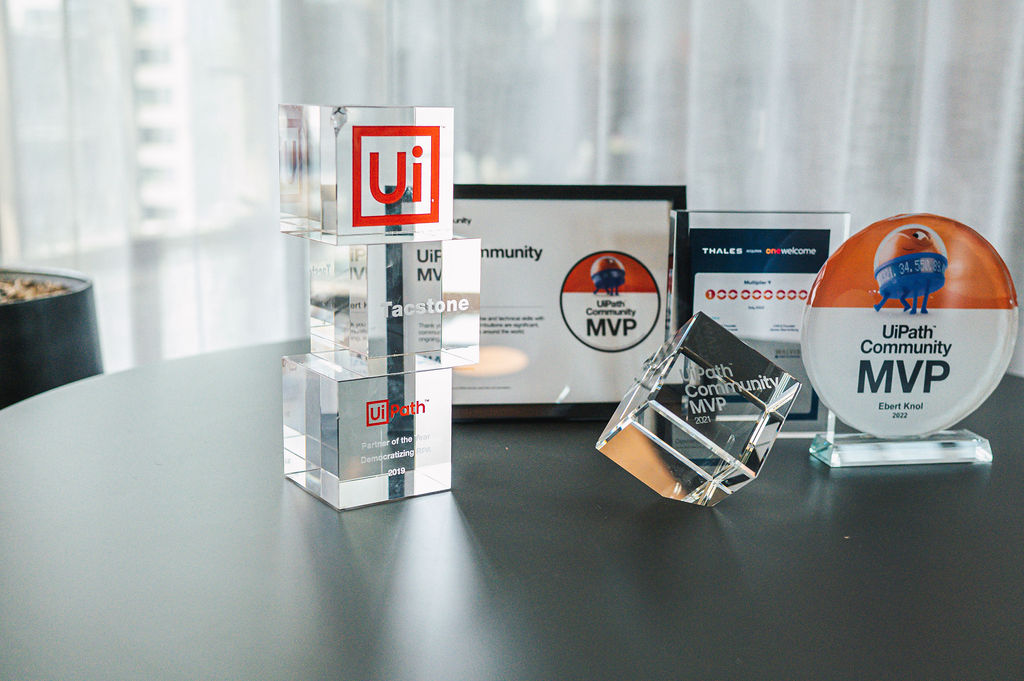
Tacstone Technology achieves Diamond partner status with UiPath
Tacstone Technology and PTWEE join forces for test automation