Smart Scheduling and Planning with Deterministic AI

Labor Shortages and a Tight Labor Market
The tight labor market and the growing labor shortage are making it increasingly challenging to maintain a fully staffed workforce.
Stricter Collective Bargaining Agreement (CBA) and Working Hours Act (ATW) requirements
Increasingly strict collective bargaining agreement rules and laws and regulations leave less room for flexible, variable work schedules.
High absenteeism and turnover due to work pressure
High absenteeism, high turnover, and unpredictable schedules are putting even more pressure on the remaining healthcare professionals.
Spending a lot of time manually piecing things together
Planners spend a lot of time rescheduling, making phone calls, and making corrections due to mounting shortages and the growing demand for care.
Our Perspective
We put the employee first. Preferences, availability, and circumstances are consistently and fairly taken into account. If an employee’s preference isn’t met in one month, they’ll receive higher priority the following month. Predictability gives employees control over their time and, with it, autonomy. Autonomy increases engagement and reduces absenteeism. That is the foundation for sustainable employee retention.
That’s why we use deterministic AI: no guesswork or black-box algorithms, just mathematical certainty. This allows us to generate schedules at lightning speed that are 100% compliant with the collective bargaining agreement, job requirements, and preferences. Predictable for employees, manageable for schedulers, and controllable for the organization.
”How can we ensure, in a sustainable way, that we take on all the work with and for one another?










More control, more autonomy
Control and Insight
By aligning care demand, availability, and policies, we gain greater insight into capacity and ensure the effective deployment of staff, even across teams.
Fair hybrid self-scheduling
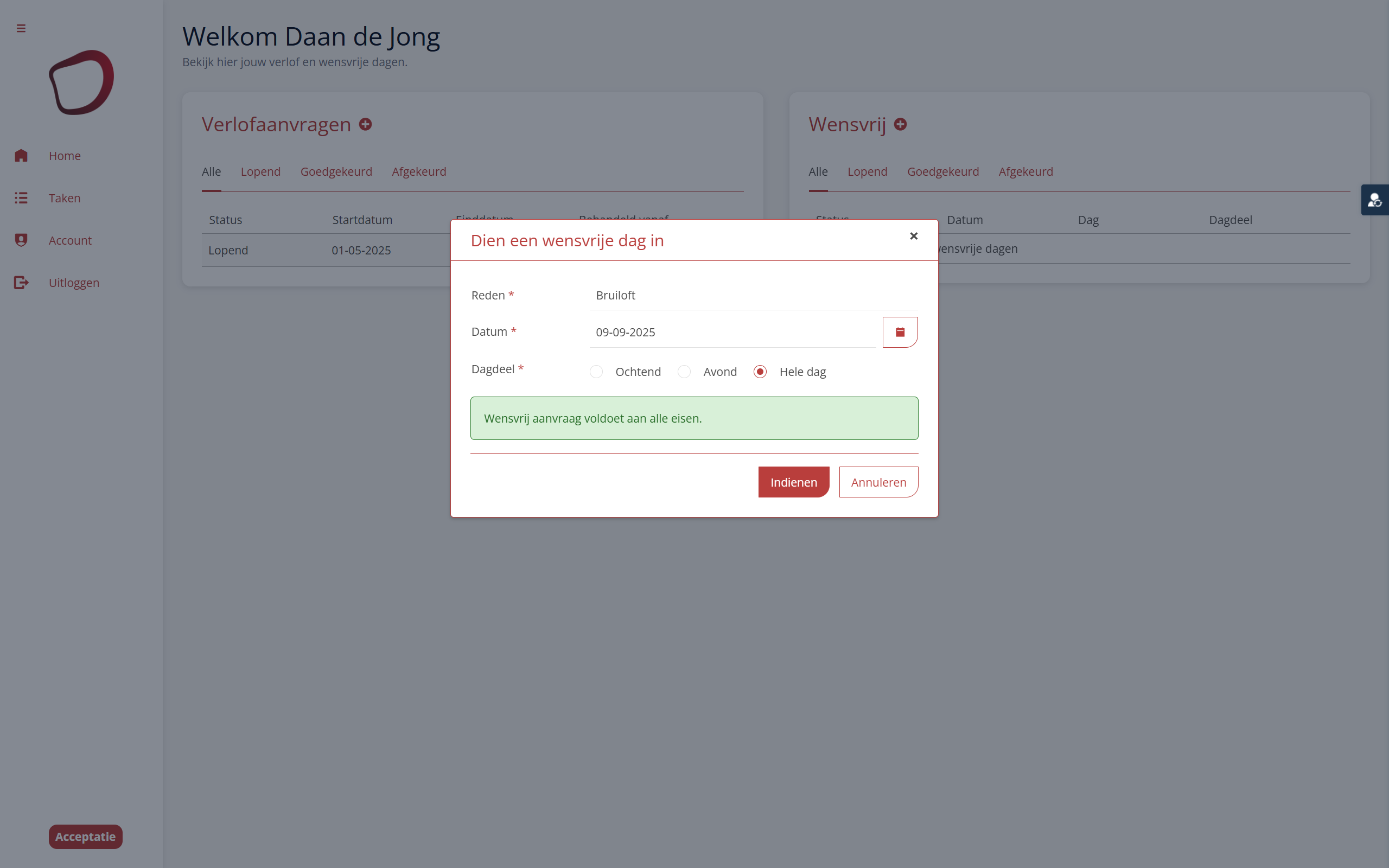
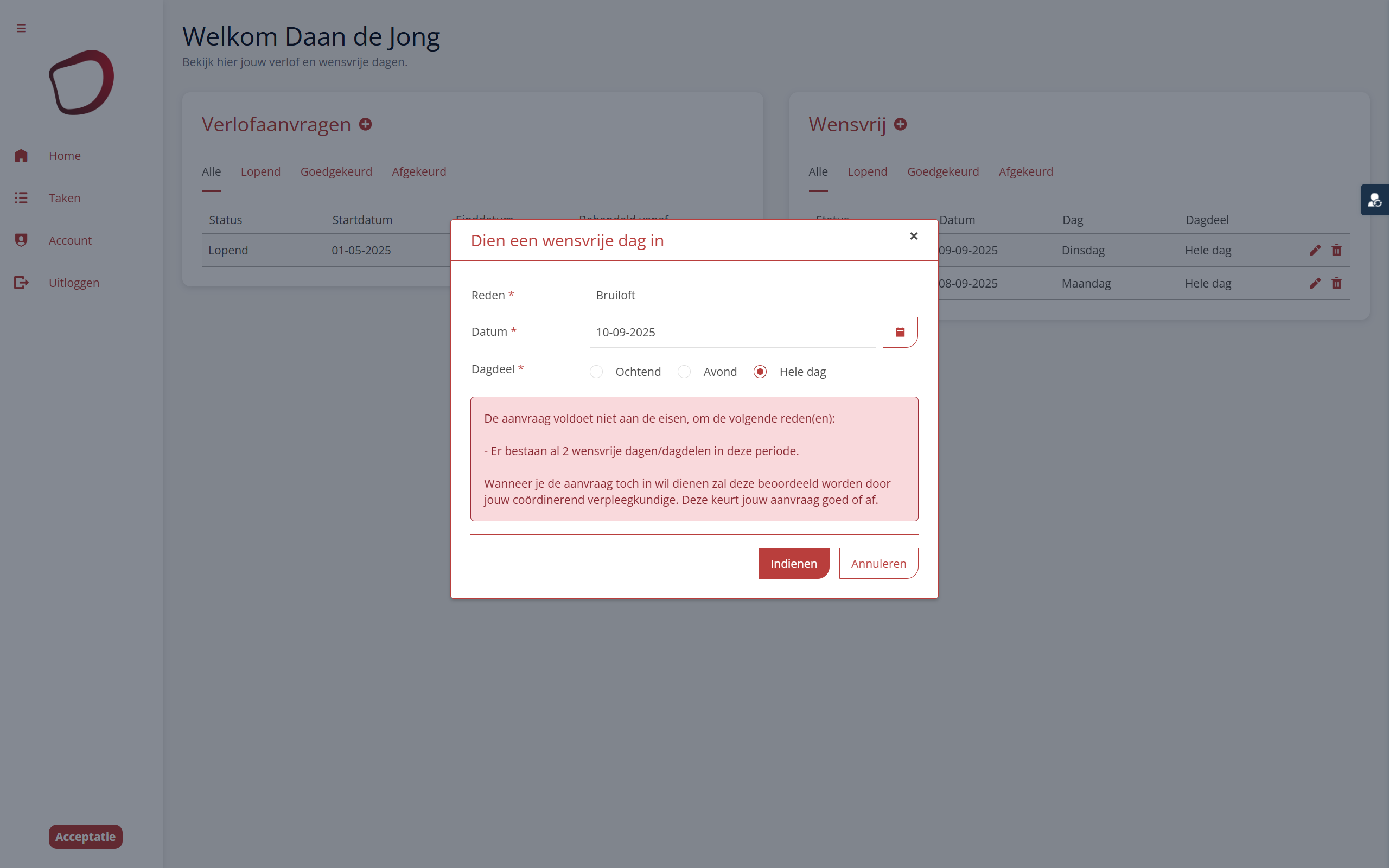
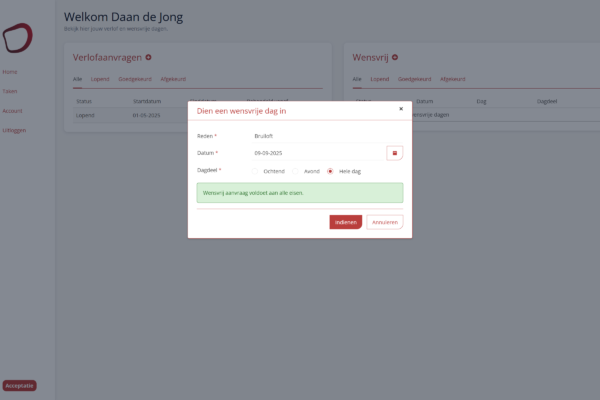
Employees experience greater autonomy within clear guidelines because personal circumstances are systematically taken into account. Giving employees more control reduces stress and creates space and peace of mind.
A complete schedule in just a few minutes
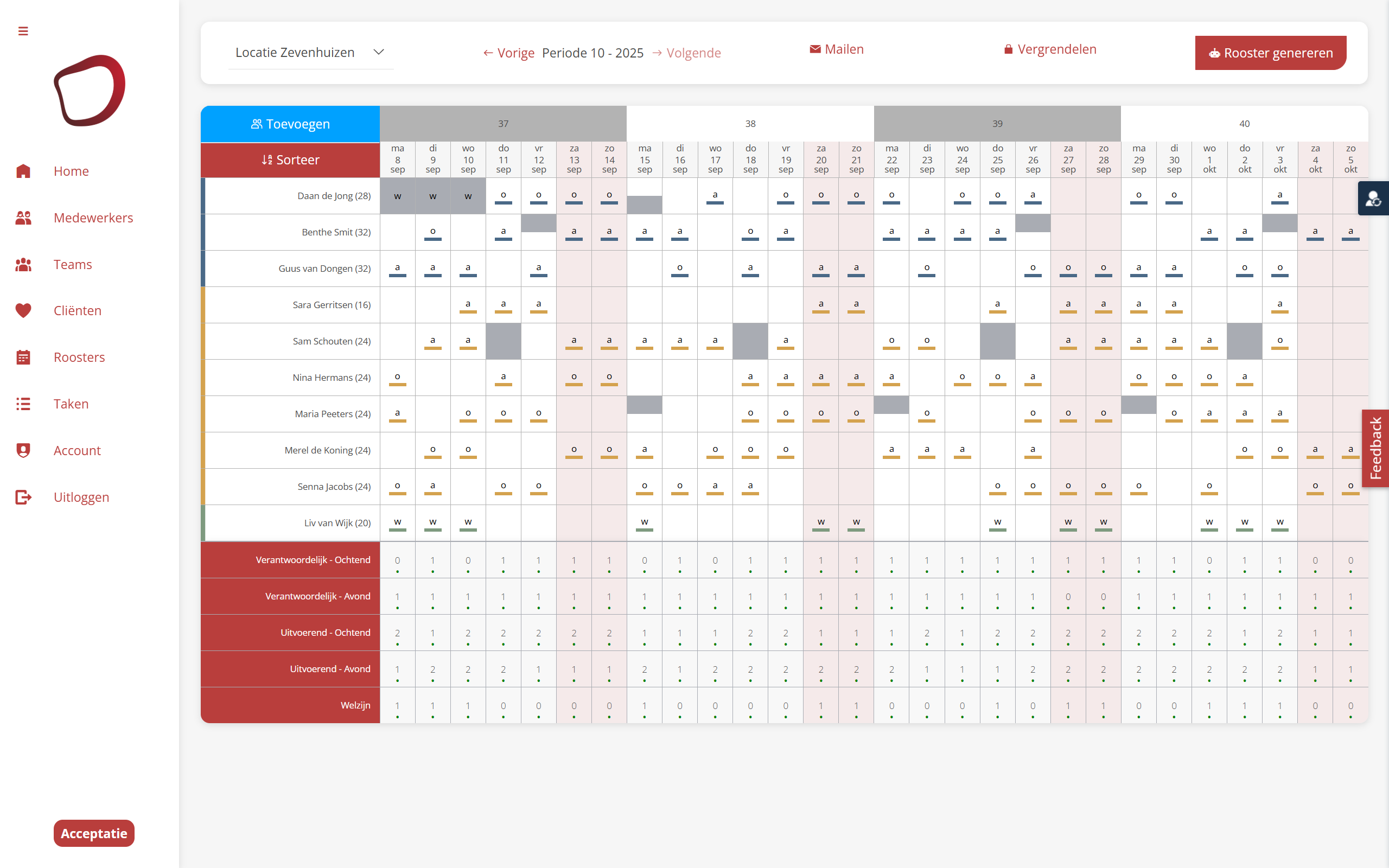
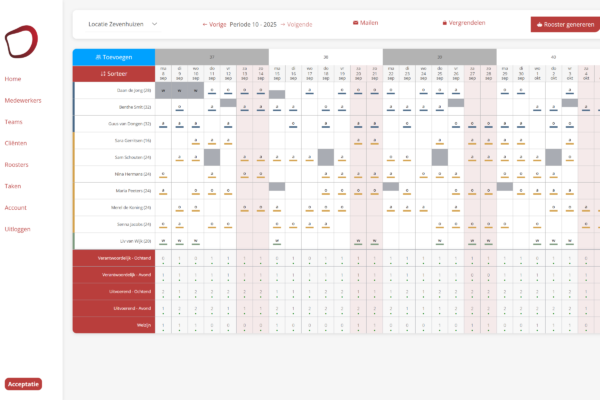
An objective and transparent schedule that automatically takes all appointments and preferences into account.
What are the benefits?
Calm and Control
Greater Focus on Quality Care
Through efficient scheduling and planning, we free up time to focus on what really matters: providing quality care.
Up to 80% time savings
Time that was previously spent on scheduling and planning can now be used for other purposes. This creates opportunities to ensure quality, exercise professional judgment, and foster better collaboration.

“Most nurses experience scheduling as a burden. They would much rather get to the clients.”
The Approach
The schedule is the result, not the starting point.
Care needs, available capacity, contract information, qualifications, preferences, and organizational rules all come together in a single deterministic calculation. No black box: every result is explainable.
The system calculates; people decide.
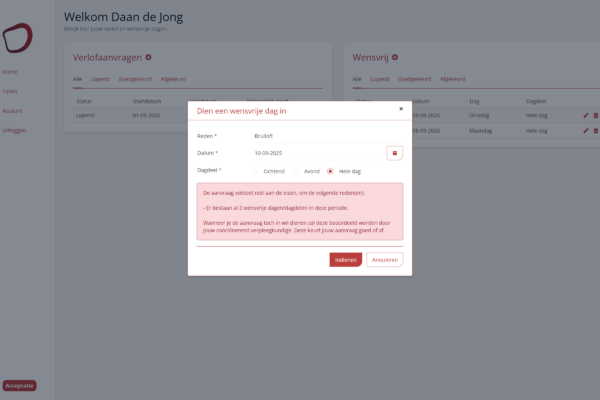
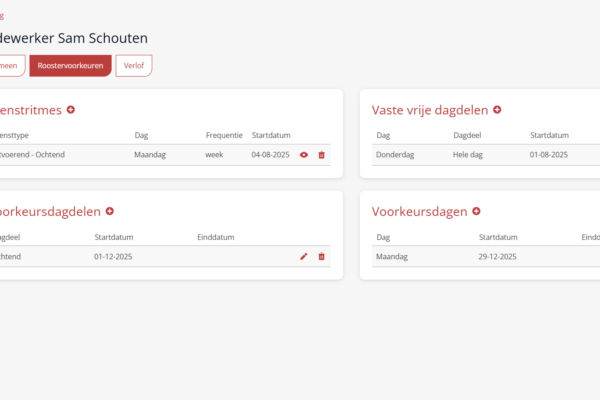
Hard constraints are part of the calculation; soft conditions are taken into account. The planner sees what information and rules underlie the proposal, makes adjustments where necessary, and retains the final decision.
Seamless integration with existing systems.
Does AI decide my schedule?
No. The app uses a deterministic calculation (deterministic AI), not AI that assesses probabilities—so there’s no guesswork involved. The system calculates; the user decides.
Can I still adjust the schedule, and what will happen to our exceptions and unwritten rules?
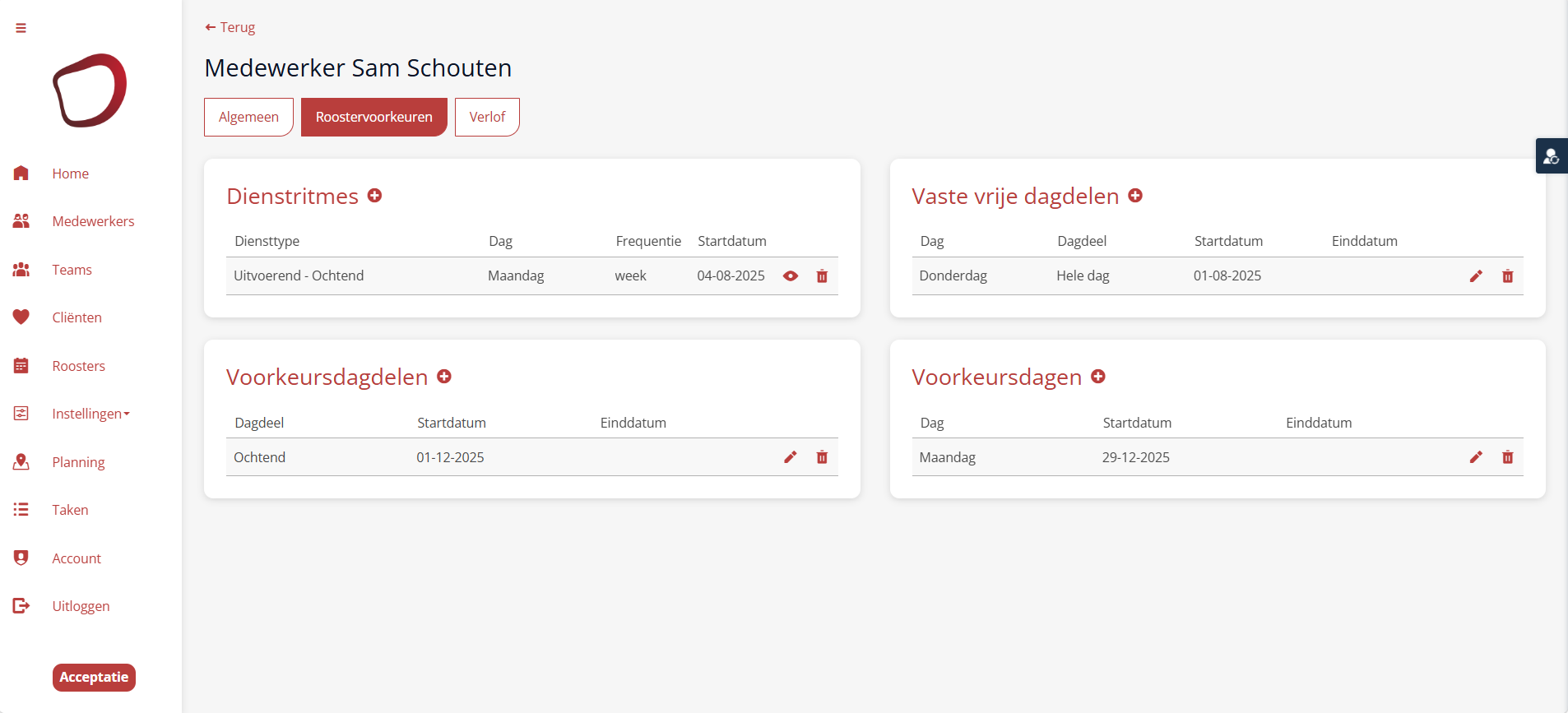
The app supports the scheduler. Established rules and available information are incorporated into a proposed schedule, while the scheduler always maintains insight into the rationale and retains the final decision-making authority. Unfillable shifts are highlighted, and the proposal can be easily adjusted. Exceptions and organization-specific agreements can also be easily added, modified, or temporarily disabled.
How does the app handle sick leave reports or exchange requests?
Instead of manual trial-and-error, a recalculation is easily performed. The app takes into account routes, times, preferences, and qualifications. Additional staff are called upon only when necessary—for example, from on-call employees or the flex pool.
Can the app be used both on-campus and off-campus?
Yes. The app was developed for various healthcare settings. Whether staff members work in the community, at a residential facility, or within a department, the app helps schedulers combine available capacity, required qualifications, and organizational policies into a realistic schedule proposal. The app’s design aligns with the organization’s actual practices, not the other way around.
What about the daily schedule and travel time?
When combining AFAS and ONS data, factors such as travel times are taken into account. In addition, the integrated daily scheduling system with smart routing minimizes idle time, allowing teams to make the most of their time on the job.
Will the app replace our current scheduling system?
No. The app works in conjunction with existing healthcare and HR systems and does not replace them. As an intelligent decision-making layer , the app helps make smart scheduling choices, while the scheduler retains control and knowledge and decision-making remain within the organization.
What data sources does the app use?
Two sources: AFAS provides contract information and employee preferences, while ONS (Nedap) provides the care demand and the resulting capacity requirements. The app uses this information to calculate staffing assignments, taking into account contract hours, qualifications, team composition, travel times, and personal preferences.
Does this work even if we don't use ONS or AFAS?
Yes. The app isn’t limited to ONS or AFAS. As an independent decision-making layer, the solution can be integrated with various source systems. We assess which systems each organization uses and determine the best way to set up the integration.
On which platform does the app run?
The app was developed on Mendix, a leading low-code platform. This allows new features and changes to be implemented quickly, while users have access to the application through a secure environment. The solution integrates easily with existing systems within the organization, and the data never leaves the organization.
FAQ
Read the answers to the most frequently asked questions here!